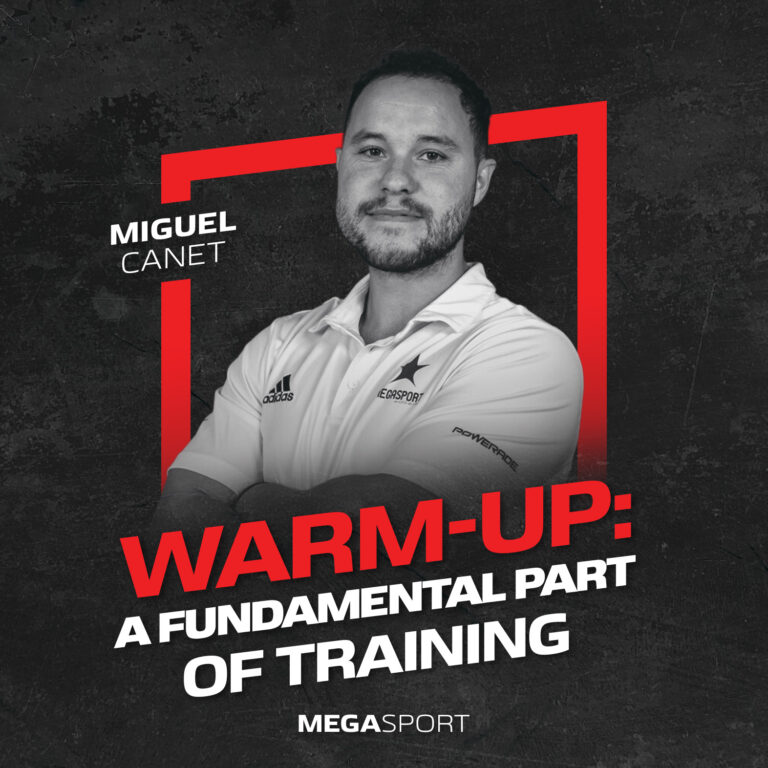
When we talk about training, we usually think directly about the main routine: strength exercises, a cardio session, a group class, or the sport that motivates us the most. However, there is one aspect we often overlook that makes the difference between effective and incomplete training: the warm-up.
The warm-up is an essential phase of training. Preparing the body correctly provides both physical and mental benefits:
- – Activates blood circulation, improving the supply of oxygen to the muscles.
- – Raises body temperature, which increases muscle elasticity and reduces the risk of injuries.
- – Prepares the nervous system, improving coordination and reaction speed.
- – Connects mind and body, helping you concentrate on the session you are about to perform.
The warm-up does not have to be long or complex, but it should be progressive, dynamic, and specific depending on the activity you are going to do.
- Joint mobility: start with gentle movements of the main joints (neck, shoulders, hips, knees, ankles).
- Cardiovascular activation: a few minutes of light jogging, cycling, or jumps to raise your heart rate.
- Dynamic exercises: squats, lunges, skipping, jumping jacks… movements that involve large muscle groups.
- Specific work: movements similar to those you will do later in your training (for example, lateral movements if you are going to play paddle tennis or resistance band exercises if you will train strength).
With 10 to 15 minutes of a well-structured warm-up, it is enough to prepare the body. What matters is not the duration but the quality of the exercises and that they truly activate your body.
The warm-up is an investment in your performance and your health. Dedicate those few minutes beforehand, and your body will thank you with better results and fewer injuries!
When we talk about training, we usually think directly about the main routine: strength exercises, a cardio session, a group class, or the sport that motivates us the most. However, there is one aspect we often overlook that makes the difference between effective and incomplete training: the warm-up.
The warm-up is an essential phase of training. Preparing the body correctly provides both physical and mental benefits:
- – Activates blood circulation, improving the supply of oxygen to the muscles.
- – Raises body temperature, which increases muscle elasticity and reduces the risk of injuries.
- – Prepares the nervous system, improving coordination and reaction speed.
- – Connects mind and body, helping you concentrate on the session you are about to perform.
The warm-up does not have to be long or complex, but it should be progressive, dynamic, and specific depending on the activity you are going to do.
- Joint mobility: start with gentle movements of the main joints (neck, shoulders, hips, knees, ankles).
- Cardiovascular activation: a few minutes of light jogging, cycling, or jumps to raise your heart rate.
- Dynamic exercises: squats, lunges, skipping, jumping jacks… movements that involve large muscle groups.
- Specific work: movements similar to those you will do later in your training (for example, lateral movements if you are going to play paddle tennis or resistance band exercises if you will train strength).
With 10 to 15 minutes of a well-structured warm-up, it is enough to prepare the body. What matters is not the duration but the quality of the exercises and that they truly activate your body.
The warm-up is an investment in your performance and your health. Dedicate those few minutes beforehand, and your body will thank you with better results and fewer injuries!